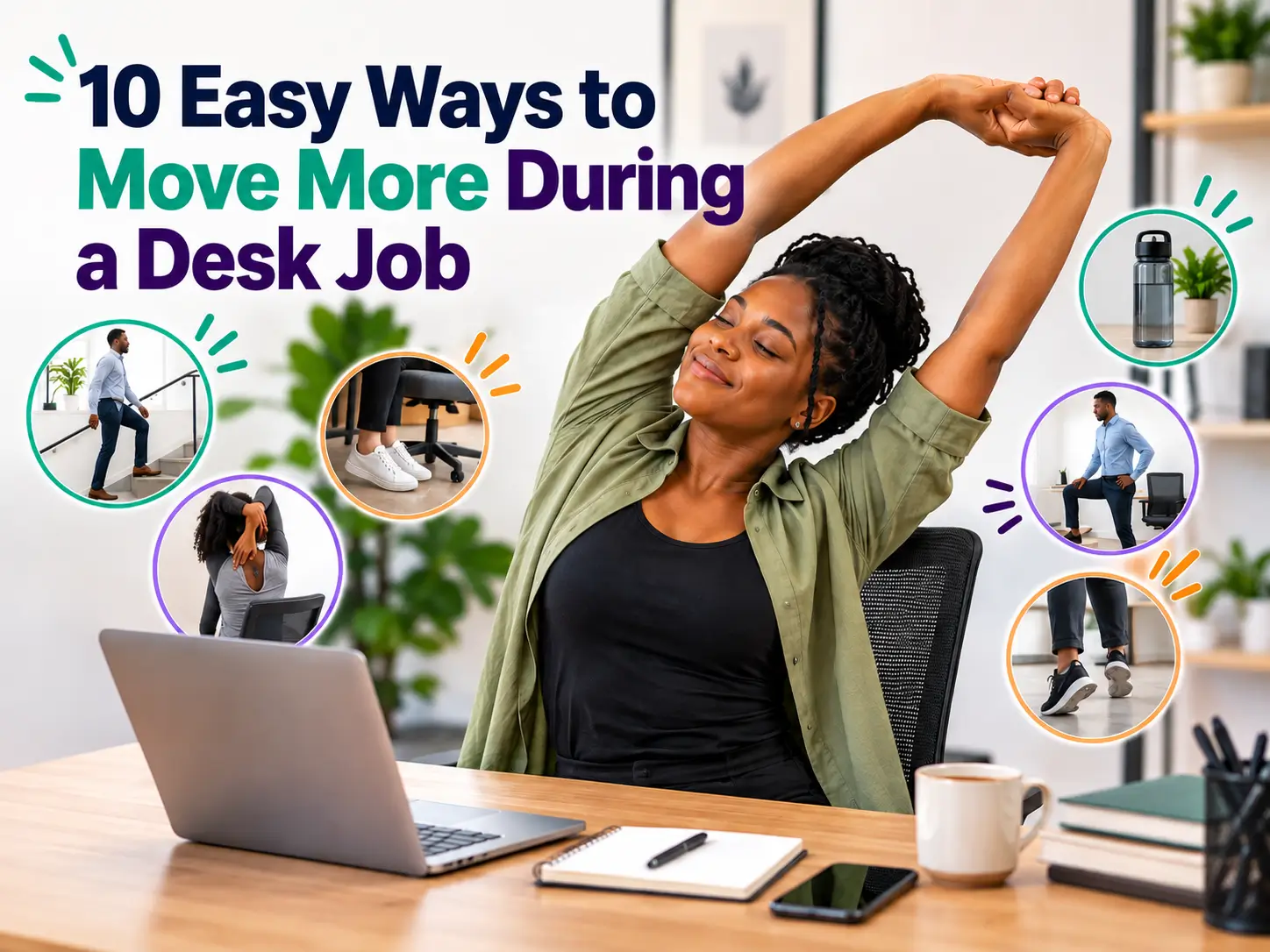
The last time you left your workstation was two hours ago, and you have not stood up since. Your legs have gone quiet in that strange, tingling way. Your shoulders have crept up toward your ears without permission. This is the part of earning online nobody warns you about, the part where your income grows while your body slowly forgets how to move. I bet you that’s exactly where desk job exercises for digital earners stop being optional for you and start being the line between building a career that lasts ten years successfully and one that burns you out by year two.
But listen, the good news is that we can fix this. And fixing it does not require a gym membership or an extra hour I know you do not have. It requires ten small, deliberate shifts built directly into the work you are already doing. So, let’s get to it.
Why movement breaks matter more than you think
You know, desk job exercises or movement breaks, as the case may be, are not only all about burning calories. Another real value of these short movement breaks lies elsewhere entirely.
For example, short bursts of standing and moving restore blood flow to your brain, which is exactly what keeps your focus sharp during long stretches of writing, editing, or any type of client work.
Cornell University’s ergonomics research, developed by Professor Alan Hedge, introduced a pattern called the 20-8-2 rule: 20 minutes sitting, 8 minutes standing, 2 minutes moving, repeated throughout the workday.
Their studies found this rhythm did not hurt task performance. Therefore, movement breaks do not negatively impact your work; instead, they help you maintain the ability to produce quality work for longer stretches without crashing before midday.
You can start making the following movements immediately as you keep building your income.
1. Stretch the moment you close one client tab and open another
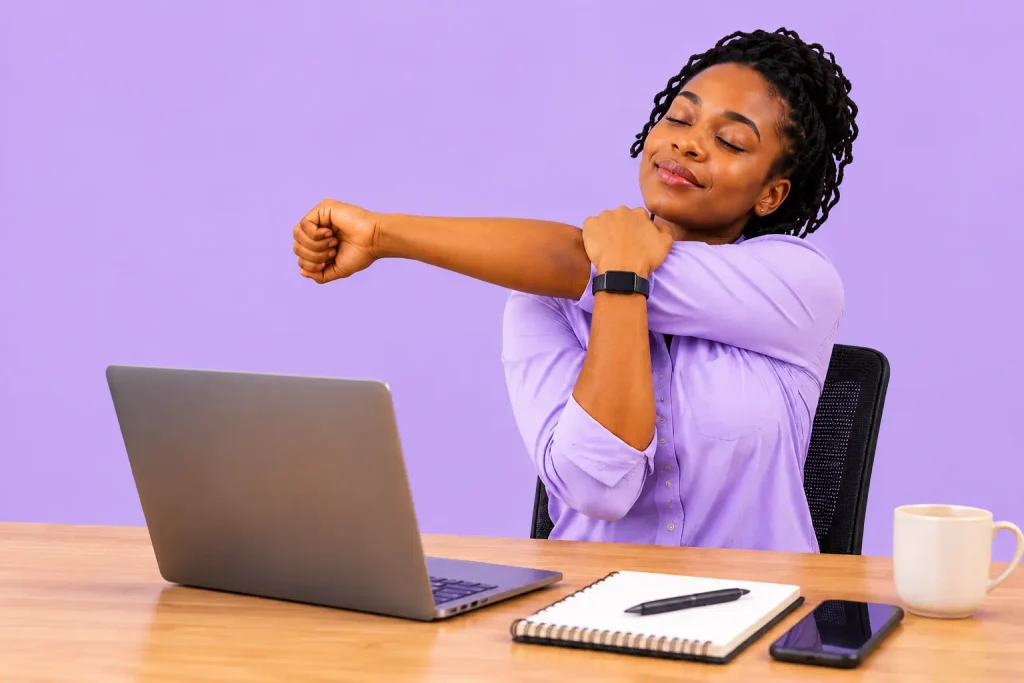
In our line of work, we juggle multiple clients or even our personal tasks daily, and every tab switch is a natural pause point we ignore.
Let me paint a picture for you: a freelance writer moving from one article draft to the next client’s brief can use that exact second to stand, roll her shoulders back, and take three deep breaths before resuming typing and brainstorming.
This “overlookable” activity can turn a boring administrative moment into a built-in desk stretch exercise without needing a separate reminder app.
2. Use upload and export time as a movement window
You video editors, traders, and even content creators, y’all know the frustration of watching a progress bar crawl. Instead of scrolling on your phone during that wait, you can use those two or three minutes to do calf raises beside the desk or a standing side stretch.
Meanwhile, your body has already banked a small win before your screen gets to its destination. Did I mention that I typed this paragraph just after doing some calf raises? I live by what I preach.
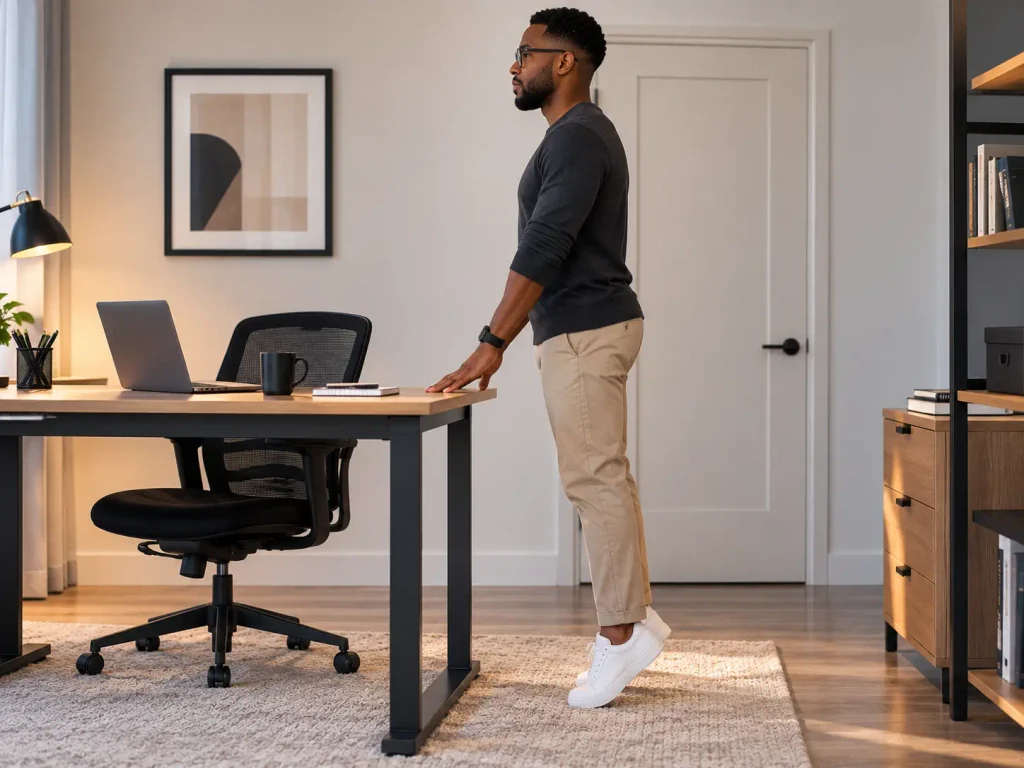
3. Walk or pace during every voice-only call
Not every call needs your eyes glued to a screen. In one of my blog posts, I mentioned that it is one of the standing rules I live by. I must pace around the room instead of sitting still while answering any call that doesn’t require me to look at my screen.
This single habit alone can add up to real distance covered across a busy week of back-to-back calls, all without blocking off separate exercise time. Pacing while making a call doesn’t have to end after work hours. You can adopt it as a lifestyle.

4. Do a two-minute reset before your top priority task
Before diving into the task that matters most for the day, give your body sixty to ninety seconds of movement first. I hope you remember how athletes do a little warm-up before they go into action in the field.
That is exactly how you can do a few toe touches and a standing twist before opening the voluminous file. You see this movement; it signals to your brain that focused work is about to begin.
Many digital earners already use the Pomodoro method to manage deep work sessions. However, most stop at the timer buzzing and simply check their phone during the break.
You can instead treat every timer alert as a cue to stand and stretch for exactly two minutes before the next session begins. This can build on the last short burst movement you did, and it’ll keep compounding to deliver great benefits to your body.
5. Pair focus timers with movement, not just breaks
Many digital earners already use the Pomodoro method to manage deep work sessions. However, most stop at the timer buzzing and simply check their phone during the break.
You can instead treat every timer alert as a cue to stand and stretch for exactly two minutes before the next session begins. This can build on the last short burst movement you did, and it’ll keep compounding to deliver great benefits to your body.
6. Turn the wait for client feedback into a real walk
The gap between sending a draft and getting a reply is one of the most anxious, wasted stretches in a digital earner’s day. Trust me, because I’ve been there countless times.
Anxiety can make you spend that time refreshing your inbox from the same chair, tension building with every unread notification. During that waiting period, you can take a real 10-minute walk outside before checking for a response.
The feedback will still be there when you return, but your legs will have moved, your mind will have cleared, and the anxious inbox-checking loop gets broken.
7. Replace one refill trip with a short lap
Instead of walking straight to the kitchen and back for water or coffee, take one extra lap around your living space first. I do this a lot; instead of that short refill, I deliberately walk to the farthest wall and back 10 to 20 times before refilling my cup. I
t sounds minor, but this single swap adds meaningful steps to a day that would otherwise involve almost none. I target tasks with non-immediate deadlines for this activity.
8. Stretch during the audio-only portions of video calls
Not every second of a client video call requires being on camera. Here’s a desk job exercise you can sneak in when your camera briefly turns off, or during a portion where you are only listening to a long strategy call.
Do a seated spinal twist or a neck stretch without anyone noticing.
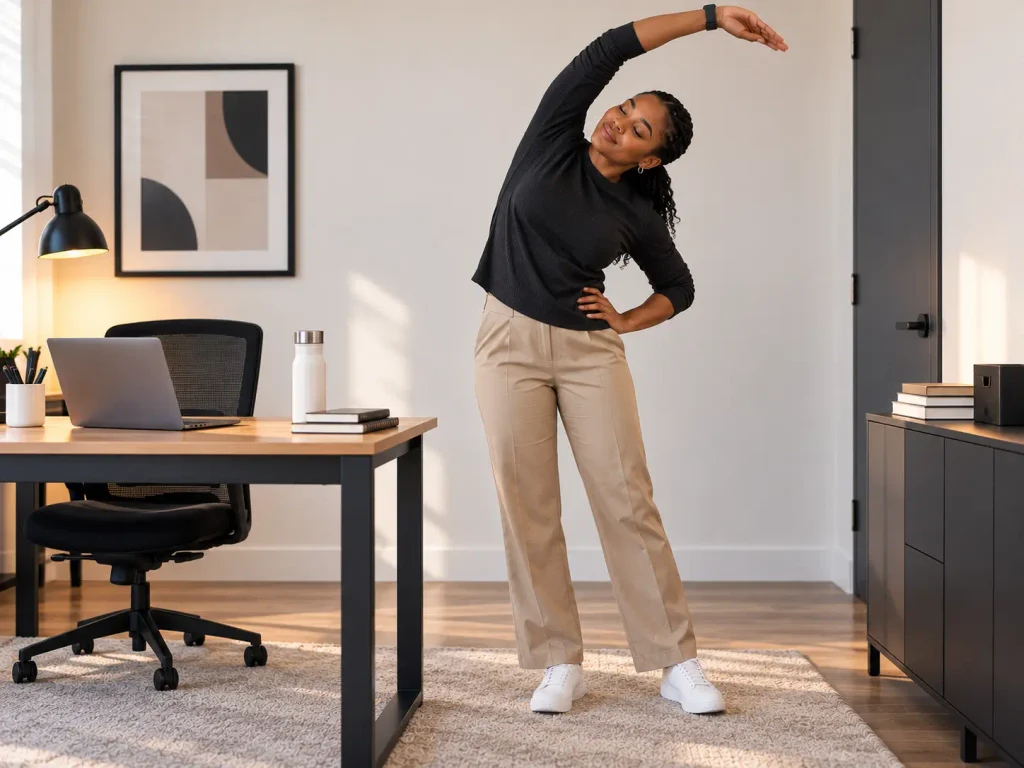
9. Attach movement to money moments
This desk job exercise works because it uses a trigger that already excites you. Every time a payment notification lands, whether it is a client invoice getting paid or a sale coming through your online store, or even some money from your forex trading.
Do ten jumping jacks or a fast lap around the room before opening your banking app. If you’re a freelancer who gets three payment alerts in one day, you end up with three extra rounds of movement, driven by the same dopamine that comes from getting paid. Can I hear amen!?
10. Close every work block with a doorway stretch
Before shutting your laptop at the end of a work session, stand in a doorway and stretch your arms against the frame for ten seconds. A big doorway stretch releases tension in the chest and shoulders that built up from hours of leaning toward a screen and helps reduce the bad effects of a sedentary lifestyle.
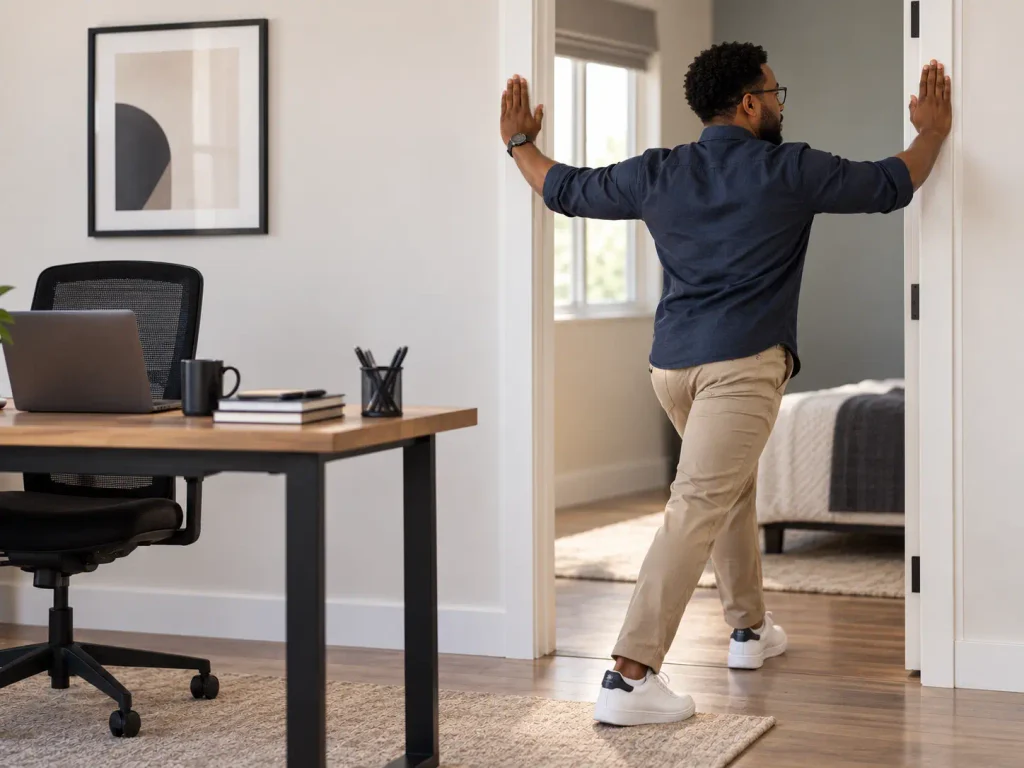
You see? None of these ten habits require extra time carved out of your already packed schedule. Thus, they work precisely because they live inside tasks you are already doing, invoices you are already sending, calls you are already taking, timers you are already setting.
Consequently, movement stops feeling like one more thing on your to-do list and becomes part of how you already work and earn.
Remember, your body funds every dollar you make online. Give it the same attention you give your clients and your deadlines.
So move your way to better focus and fewer aches. Join EarnerCare for practical guides built specifically for digital earners who want to protect their health while growing their income.
FAQs
How many times a day should a digital earner take a movement break?
Aim for a short movement moment every 20 to 30 minutes, even if it only lasts one or two minutes. Consistency throughout the day matters more than a single long break.
Do desk stretches actually replace real exercise?
No, they don’t. However, desk stretches and movement breaks support your body during work hours, but they work best alongside regular exercise outside of work, not as a full replacement for it.
I work alone with no coworkers; how do I remember to move?
Attach movement to actions you already perform daily, such as sending an invoice, closing a tab, or hearing a notification sound, so the trigger comes from your workflow rather than from memory alone.
Can I do desk job exercises during client video calls without looking unprofessional?
Yes, subtle stretches like shoulder rolls, seated twists, or ankle circles are unnoticeable on camera, especially during moments when you are only listening rather than speaking.
What is the fastest way to start building this habit?
Pick just one trigger from this list, such as export time or payment notifications, and apply it consistently for one week before adding a second habit.
Will moving more during work affect how much I earn?
Indirectly, yes. Reduced fatigue and better focus mean fewer errors, faster turnaround on client work, and more sustainable working hours, all of which protect your long-term earning capacity.